DIY Mini Split No Vacuum Pump Precharged Line Set: MRCOOL's Official Pre-Charged Line Sets vs Zone Air
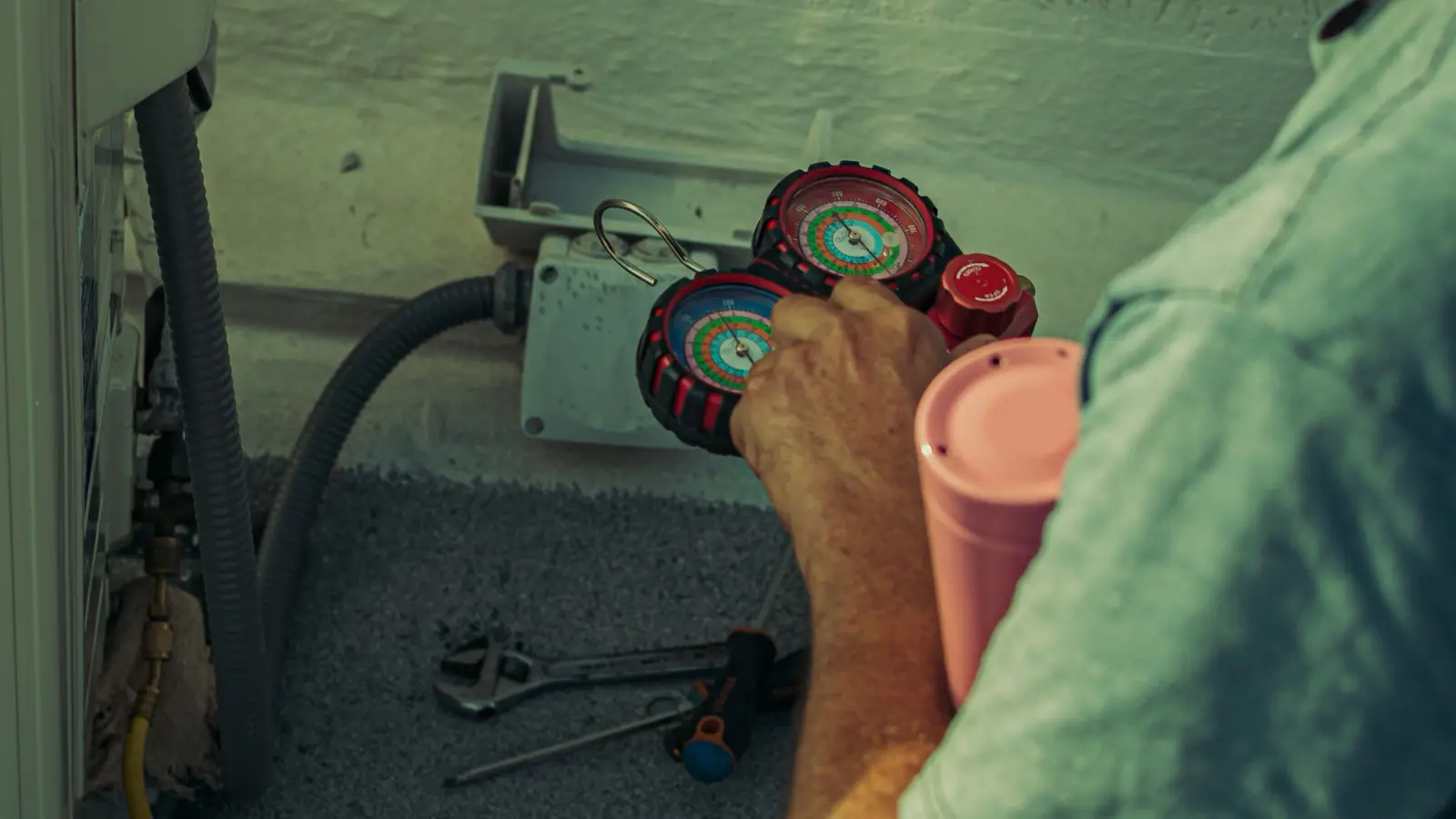
Zone Air ships true DIY mini split systems that require no vacuum pump, no HVAC gauges, and no HVAC license. This is possible because each system ships with pre-charged line sets featuring factory-sealed quick connect fittings on both ends — the refrigerant loop is never opened to the air. Flare brands such as Pioneer and Della work differently: their lines have to be vacuumed, and each brand has its own answer to that step. Below, we break down how pre-charged line sets work, what "no-vac" actually means, what Pioneer and Della offer for the vacuum step, and when Zone Air's custom-length line sets are the better fit.
Consider a concrete example: a homeowner installing a 12,000 BTU DIY mini split in a 400 sq ft workshop in spring 2026 using a pre-charged line set, finishing the job over a single weekend. Skipping a contractor install typically saves $1,500–$3,500 per zone. Pre-charged systems do not require EPA Section 608 certification for homeowner installations because you never touch refrigerant.
Already installed and showing a fault? Look it up: Pioneer error codes, Della error codes, Zone Air error codes, or the full mini split error code lookup.
How Pre-Charged Line Sets Actually Work
A pre-charged line is copper refrigerant tubing that arrives from the factory already filled with refrigerant and sealed at both ends, with each end staying sealed until connection. Pre-charged line sets are factory-sealed to avoid contamination from air and moisture, which is what eliminates the need for vacuuming entirely.
Take Zone Air as the worked example. Its 12K systems include a 16 ft line set, and other runs are made to length from 5 to 75 ft in whole feet, in diameter pairs matched to the system's BTU size. Each end of a quick connect line has a spring-loaded valve that stays closed until the fitting is tightened, which prevents refrigerant loss. A pre-charged line cannot be cut or shortened once it leaves the factory.
Installation means removing the caps and hand-starting the fittings, which are designed to thread on without cross-threading. You then torque to spec with a wrench, and the valves open to let refrigerant flow. Each connection takes minutes, and no specialized HVAC tools are needed — no manifold gauges, no flaring kit, no vacuum pump, no nitrogen.
Not every brand goes this way. Pioneer's help center says it does not offer pre-charged line sets, citing the reliability of spring fittings, and ships flare connections instead. After install, a quick connect system can be leak-checked with soapy water at each joint once the service valves are open.
Pre-Charged Condenser vs Pre-Charged Line Set
The phrase "pre-charged" gets used for two different things, and the difference decides whether you need a vacuum pump. On a flare system, the refrigerant is in the outdoor unit when it comes from the factory, but the copper lines and the indoor coil arrive empty and full of air and moisture. Those lines and that coil have to be pulled down to a deep vacuum before you open the outdoor unit's valves. A pre-charged line set is different: the line itself comes filled with the right amount of refrigerant for its length and sealed at both ends, so there's no air in the circuit to remove.
So when a listing says "pre-charged", you should check which part it means. Only a pre-charged line set with sealed quick connect fittings lets you do an install with no vacuum needed. If the box holds bare copper and flare nuts, you'll need the pump, a micron gauge and flare tools, or you'll need a technician for that step.
Quick Connect vs Traditional Flare-and-Vacuum
A traditional mini-split install requires a vacuum pump to remove air and moisture from the lines before the refrigerant is released. An HVAC technician runs bare copper, flares or brazes the joints, pulls a vacuum to ~500 microns, and weighs in refrigerant from a tank — all of which requires special tools and EPA Section 608 certification for refrigerant handling, plus added precautions for mildly flammable (A2L) R-454B in open-system work. The vacuum step matters because moisture left in a poorly evacuated system can form acids that damage the compressor; a factory-sealed pre-charged line never lets that moisture in to begin with.
| Step | Pre-charged quick connect | Traditional flare-and-vacuum |
|---|---|---|
| Line prep | None: sealed, pre-charged, capped | Cut, deburr, flare or braze bare copper |
| Evacuation | None | Vacuum pump to ~500 microns, decay test |
| Refrigerant | Already in the lines and condenser | Release factory charge, weigh in extra for long runs |
| Tools | Wrenches, torque wrench, drill, level | Plus gauges, vacuum pump, micron gauge, flaring kit, scale |
| License | None for the refrigerant side | EPA 608 to handle refrigerant |
| Line length | Fixed at the factory; coil excess, never cut | Cut to any length on site |
Pre-charged quick connect line sets flip that process: no open copper, no vacuum, no nitrogen. The refrigerant charge is pre-measured for the line set length, the quick-connect fittings keep the install simple, and the "no-vac" claim is legitimate because the refrigerant is sealed factory-to-fitting. If you go the flare route instead, our guide on how to vacuum a mini split walks through that step.
What EPA Rules Cover
EPA Section 608 certification is about opening refrigerant circuits during service, repair and disposal and about buying refrigerant. Connecting a factory-sealed quick connect line set by the manufacturer's instructions doesn't open the circuit or put refrigerant in your hands. That's why a pre-charged install has no 608 step.
Two rules still apply to everyone, certified or not. Knowingly venting refrigerant is illegal. That's one more reason a sealed line is never cut. And since 2018 the limit on refrigerant sales has covered HFC refrigerants such as R-410A and R-454B, so buying refrigerant in containers over 2 lb takes a 608 certification. That leaves a homeowner able to legally install a pre-charged system but with no legal way to buy refrigerant to top one up, so if a joint ever leaks, the repair is a job for a certified technician.
Planning Your Install and Avoiding Kinks
Choose your line set length before shopping. Too short and you can't connect; too long and you coil excess copper behind the condenser. Route the line from the indoor unit to the outdoor unit on paper first, accounting for vertical rise and bends, and keep every bend gentle — a kinked pre-charged line cannot be repaired in the field. Use couplers sparingly, because each one adds another pair of joints to torque and leak-check.
Drill a 3″ to 3-1/2″ wall penetration sloped slightly downward toward the outside, feed the control cable and drain first, then the pre-charged line. Never cut or try to shorten a sealed line — this vents refrigerant illegally and voids your warranty.
Not sure what size you need? Run the room through a mini split sizing calculator before you pick a line set, since the BTU size decides the line diameter.
Zone Air vs Pioneer and Della: Line Set Strategy and the Vacuum Step
Pioneer and Della both sell flare-connection systems with a factory-charged outdoor unit, so the line set and indoor coil have to be vacuumed during the install. Zone Air's line sets take a structurally different approach: pre-charged single runs made to length, from 5 to 75 ft in whole feet, with nothing to evacuate.
- Pioneer: its self-installation page says you can install a Pioneer system yourself and lists a flaring tool, torque wrench and vacuum pump among the tools. The same page says only qualified installers must install the refrigerant lines and evacuate the circuit. As an alternative to the pump, Pioneer sells the KWIK-E-VAC flushing kit ($34.75 in October 2026), which it says works by flushing air and other non-condensable gases out of the copper line set and indoor unit.
- Della: its product FAQ says the condenser and lines are not pre-vacuumed and must be vacuumed before the refrigerant is released. Della recommends professional HVAC installation but rents an install kit with a vacuum pump, micron gauge, hose, valve core tools and torque wrench: $100 for 7 days or $150 for 15 days, each plus a $300 deposit.
- Zone Air: a 40 ft run ships as an exact 40 ft pre-charged line, and a 60 ft run as a single 60 ft line. There is no excess to coil and no vacuum step.
Beyond the line set:
- Efficiency is close. Zone Air's 12K 230V wall system is rated 24 SEER2 and its 12K 115V is 23 SEER2. Pioneer's Quantum Ultra 12K matches both, at 24 SEER2 on 230V and 23 SEER2 on 115V, and its Quantum Hyperformance 12K is rated 25 SEER2 on 230V. Della's Optima 12K 115V is 23 SEER2.
- 115V power. All three brands sell 115V 12K systems, but the circuits differ. Pioneer lists a 25 amp single-pole breaker for its 12K 115V models, and Della lists a 25 amp max fuse for the Optima 12K. Zone Air's run on a dedicated 15 amp circuit, with an optional cord kit that lets you plug into a dedicated GFCI outlet where local code allows — the easiest power connection for garages and workshops.
- Indoor unit mix. Zone Air lets you mix wall, cassette and slim concealed ducted heads — two or three of any style — on a single multi-zone condenser. Pioneer's multi-zone range also covers wall, ceiling cassette and concealed duct heads, and Della sells wall, ceiling cassette and concealed ducted multi-zone kits. See the multi-zone concealed duct comparison.
- Price. Zone Air sells direct: $1,999.99 for the 12K 115V system and $2,049.99 for the 12K 230V. The flare systems cost less up front: Pioneer's Quantum Ultra 12K 115V starts at $1,058 and Della's Optima 12K 115V was $914.96 on the brands' own stores in October 2026. Add the cost of vacuum tools, a rental kit or a technician for the line work when you compare.
- Reviews. Zone Air averages 4.8 out of 5 from verified buyers on its own site. Della's Trustpilot profile sat at 4.4 out of 5 across 753 reviews in October 2026. Pioneer's Trustpilot profile had only 12 reviews at that point, too few to say much.
| Pioneer Quantum Ultra 12K 115V | Della Optima 12K 115V | Zone Air 12K 115V | Zone Air 12K 230V | |
|---|---|---|---|---|
| Voltage | 115V, 25A single-pole breaker | 115V, 25A max fuse | 115V, dedicated 15A (optional cord kit) | 230V |
| SEER2 | 23 | 23 | 23 | 24 |
| Line set | Flare; 10/16/25/33/50 ft copper or 10/16/25 ft flexible | Flare; 10/16/25/33/50 ft options | 16 ft included; 5–75 ft made to length | 16 ft included; 5–75 ft made to length |
| Vacuum step | Required; KWIK-E-VAC kit sold as an alternative | Required; pump kit rental from $100 | Not needed | Not needed |
| Warranty | Up to 5 yr parts and compressor if registered; 1 yr if not | 1 yr limited; lifetime parts coverage if registered within 100 days | 5 yr parts / 7 yr compressor | 5 yr parts / 7 yr compressor |
| Price | from $1,058 | $914.96 | $1,999.99 | $2,049.99 |
Warranty sources: Pioneer's warranty page, Della's warranty page and Zone Air's warranty page. Certified models are listed in ENERGY STAR's ductless category.
Senville and Cooper & Hunter Flare Tool Requirements
Pioneer and Della aren't the only budget brands that still need the vacuum step. Senville's warranty page says pressure testing and evacuation of the line sets has to be done by a licensed HVAC professional and that "DIY installation will void your warranty coverage". Cooper & Hunter's warranty policy applies only to products installed by a licensed HVAC technician, and its line sets are pre-flared copper that has to be pumped down.
Either can be a good system, but on a self-install the warranty question matters as much as the vacuum pump. Zone Air's warranty runs 5 years on parts and 7 years on the compressor with no registration cutoff, and installing it yourself does not void it.
Zone Air on Multi-Zone or Whole-Home Jobs
Custom-length line sets can matter most on a multi-zone system, where each indoor unit sits a different distance from the outdoor unit. One head might need 12 ft and another 45 ft. With Zone Air each zone gets its own pre-charged set cut to its run, and the 25, 33, 50 and 75 ft sets are each a single continuous line rather than two sets joined with a coupler.
Zone Air is the only DIY mini split that lets you mix wall-mount, ceiling cassette and concealed ducted units on one outdoor unit (as of October 2026). A 3-zone layout might put a wall unit in the living room, a ceiling cassette in a kitchen with little open wall, and a concealed ducted unit that sends air to two small bedrooms through short duct runs, all on one 27K condenser. You can draw it in the system builder. If you buy the multi-zone outdoor unit with fewer heads than it has ports, you can add a head later with another pre-charged line set and still no vacuum pump. A single-zone outdoor unit can't be converted, so if a second room is likely in a few years, start with the multi-zone unit.
Every Zone Air system is rated to heat down to −13°F and to cool in outdoor temperatures up to 131°F. Systems go through final assembly, testing, and inspection in the USA from globally-sourced components, live technical support runs 8 AM to 6 PM Mountain Time, units that haven't been installed have 30-day returns from Zone Air, and shipping is free to the lower 48.
When a No-Vacuum DIY Mini Split Makes Sense (and When It Doesn't)
You don't need to be an HVAC tech to install a pre-charged system, just careful and comfortable drilling through an exterior wall. Zone Air's FAQ says a first single-zone wall install takes 4 to 6 hours for two people, with a drill, a 3 in hole saw, a level, wrenches and a torque wrench.
Good fits:
- Bonus rooms, garages, attics and home offices
- Small homes, cabins and sheds with no ductwork
- Additions and rooms where extending central HVAC would be hard to do
- Rentals where you want heating and cooling without a renovation
Situations where DIY may not be the best fit:
- Very tall runs between floors, where getting the line set in place is the hard part
- Electrical needs that call for a panel upgrade
- Local codes that require licensed installation or an inspection
- Buildings where the route between the indoor and outdoor units is especially hard
A split approach works well for many people: do the mounting, line set run and condensate drain yourself, and hire a licensed electrician for the circuit and disconnect on a 230V system. That keeps most of the labor savings while the electrical work stays to code.
Which DIY Mini Split and Line Set Setup Is Right for You?
The choice comes down to the vacuum step. Zone Air's pre-charged, custom-length line sets give you a no-vacuum, no-gauges install with no HVAC license required. Pioneer and Della cost less up front, but their flare lines have to be vacuumed.
- Choose Pioneer or Della if: the lower up-front price matters most, you're comfortable flaring and vacuuming the lines or paying a technician for that step, and Pioneer's KWIK-E-VAC kit or Della's pump rental suits how you want to handle it. In our view the vacuum step makes these less of a true DIY install.
- Choose Zone Air if: you don't want to buy, rent or learn a vacuum pump, your runs are awkward lengths, you value 24 SEER2 efficiency on 230V, or you want the 15 amp plug-in option and concealed ducted heads.
Measure your rooms, plan your route on paper, and order the right length before you start, so a missing line set doesn't stall your weekend install. The real difference between these brands is what happens at the refrigerant connection: sealed quick connects on one side, flares and a vacuum step on the other. More brands, including EG4, Airspool and Perfect Aire, are adopting the quick connect design in 2026–2027. Of the brands compared here, Zone Air is the only one with a true no-vac line set. For the wider field, see our quick connect brand roundup and best pre-charged line set comparison.
FAQ: DIY Mini Split No Vacuum Pump
Do DIY mini splits need a vacuum pump?
Not if they use a pre-charged quick connect line set. Zone Air ships line sets that are filled with refrigerant and sealed at the factory, so the refrigerant loop is never opened to air and there is nothing to evacuate. A vacuum pump is only needed on a traditional flare-type system, like the ones Pioneer and Della sell, where bare copper is field-connected and has to be pulled down to about 500 microns before the refrigerant is released.
Do I need an EPA 608 certification to install a pre-charged mini split?
No. EPA Section 608 certification covers opening a refrigerant circuit and handling refrigerant. Connecting a factory-sealed quick connect line set does neither, so a homeowner can install it without a license. Electrical work is separate and may still need a permit or a licensed electrician under local code.
Does Pioneer sell pre-charged line sets?
No. Pioneer's help center says it does not offer pre-charged line sets and ships flare connections instead. Its self-install tool list includes a flaring tool, a torque wrench and a vacuum pump. Pioneer also sells a KWIK-E-VAC line set flushing kit, $34.75 in October 2026, which it describes as an alternative to a vacuum pump.
Can you cut a pre-charged line set to length?
No. Cutting a sealed pre-charged line vents the refrigerant, which is illegal to do intentionally, ends the no-vacuum install and voids the warranty. Excess length is coiled neatly behind the condenser instead. That is why ordering the right length up front matters, and why a line set cut to your exact run at the factory is an advantage.
Can you rent a vacuum pump for a Della mini split?
Yes. Della rents an install kit with a vacuum pump, micron gauge, hose, valve core tools and torque wrench. In October 2026 it was $100 for 7 days or $150 for 15 days, each plus a $300 deposit. Della's FAQ says its condenser and lines are not pre-vacuumed, so the system has to be vacuumed during installation before the refrigerant is released, and Della recommends professional HVAC installation for best results.
Is Zone Air more efficient than Pioneer or Della?
It depends on the model. Zone Air's 12K 230V wall system is rated 24 SEER2 and its 12K 115V is 23 SEER2. Pioneer's Quantum Ultra 12K matches both figures, at 24 SEER2 on 230V and 23 SEER2 on 115V, while its Quantum Hyperformance 12K is rated 25 SEER2 on 230V and its Diamante Pro 12K is 20 SEER2. Della's 12K models run from 19 to 25 SEER2, with the Optima 12K 115V at 23.
What is the difference between a pre-charged condenser and a pre-charged line set?
A pre-charged condenser holds the refrigerant in the outdoor unit only. The line set and indoor coil come empty, so they have to be pumped down before the valves are opened. A pre-charged line set comes already filled with refrigerant for its length and sealed at both ends. Only the second one is a no-vacuum install.
Can You Buy Refrigerant for a Pre-Charged Mini Split?
No. Since 2018 EPA's sales limit has covered HFC refrigerants such as R-410A and R-454B, and buying them in containers over 2 lb takes a Section 608 certification. A homeowner can install a pre-charged system, but a leak repair or recharge is a job for a certified technician.
Does a No-Vacuum Mini Split Need an Electrician?
It depends on the model and your local code. Zone Air's 115V single-zone systems run on a dedicated 15A circuit and are hardwired by default. An optional cord kit lets them plug into a dedicated GFCI outlet where local code allows. Every 230V system, and every 18,000 BTU and multi-zone unit, needs a dedicated double-pole circuit and usually a disconnect. That is licensed electrical work in many areas.
How Long Can a Pre-Charged Line Set Be?
Zone Air makes them to any whole foot from 5 to 75 ft, and the 25, 33, 50 and 75 ft sets are each one continuous run. Measure your route before you order, because the amount of refrigerant is matched to the line length and a sealed line can't be cut on site.
Specifications, efficiency ratings, prices and warranty terms above are manufacturer- or retailer-published as of September and October 2026 and are subject to change; verify current details before purchase. Pioneer, Della, Senville, Cooper & Hunter, MRCOOL® and Zone Air are trademarks of their respective owners. DIY HVAC Tools is not affiliated with or endorsed by Pioneer, Della, Senville, Cooper & Hunter or MRCOOL, and this is not an official publication of any of those brands.